Control -Alt -Delete

I have long thought that Donald Trump wanted to return to an alternative version of the 1990s—not the 1980s ( when Trump Inc built gaudy buildings and he became a loud-mouth celebrity of sorts); nor the 1950s—that vanilla era of seeming harmony and affluence, when Father knew Best, and Westerns dominated tv (and the issues of civil rights and women’s rights were simmering beneath the frothy surface).

The 1960s, of course, would not be the Don’s optimal back to the future decade. It was then that he avoided serving, obtaining 4 deferments, ultimately keeping him from going to Vietnam.

The turbulence of the 60s and 70s were not his bag. He began working for his father, and by 1971 took over the real estate firm and expanded it exponentially, for hundreds of businesses and partnerships.

But the 1990s….now there’s a decade to which he seems to want to return. He could Delete the Clintons, and restore an Alternative version, where he could Control the media (especially using 21st century Twitter). So far, he has sought to correct political correctness—that 90s term— by Alternatively spewing hateful, cruel, or at best, thoughtless phrases. The Contract with America will get an Alt-Right update with Trump. As long as he is in Control, (and Republicans Control both houses), the Alt-Right will Delete whatever it can.

The 90s… We were not deeply embroiled in wars and our economy was strong, and to most, felt strong. Law and Order reigned supreme. (Never mind the consequences over the last 3 decades.) The Militia movement became a thing. The President could get impeached for a sex scandal and remain in office. Microsoft was dominant. And of course, with the collapse of Communism, Russia could be our new friend.

Enter Trump. In the Trump universe of “truthful hyperbole” or Kellyanne Conway’s “alternative facts”, anything goes—especially facts. This administration is desperate to Control or provide “Alternative”, or just Delete facts that are unappealing.

The Women’s March on Saturday, an historic event in the USA and around the globe, was not only remarkable in its numbers, but in its inclusion, peace, and joy. Everywhere, participants seemed to share the same experience. Women organized a march (and satellite marches and rallies) that encouraged participation, expansion, opportunities, concern for one another, and responses to the insults and invective that Mr. Trump has hurled, especially at women. This was not merely “identity politics”, another throwback term. This was a statement of solidarity that we can do better—all of us— on a range of issues.

Communities everywhere were invigorated. Individuals were energized. The tone everywhere was positive and aspirational, in stark contrast to the “American Carnage” Inauguration speech delivered just the day before. But Trump and his spokespeople insisted on the new Control Alt Delete in response: Determined to assert Control by insisting on “Alternative Facts” and even deleting unappealing information.

Today, the Trump administration issued a gag order to the Environmental Protection Agency, instructing the EPA not to discuss a recent freeze on grant funding and forbidding the U.S. Dept of Agriculture from releasing “public-facing documents”. No tweeting, National Parks!

This Control Alt Delete strategy is Orwellian and feels utterly Anti-American, not retro. Trump proclaimed his Inauguration a “National Day of Patriotic Devotion”. His charge that day and his Control Alt Delete actions every other minute are the antithesis of the patriotic devotion that I experienced and witnessed on Saturday. And I have never felt more patriotic devotion than I did that day.

Diversity became pluralism. Liberty (not mentioned in the inaugural speech) was petitioned for all. Excellence in our institutions, not dismantling them, was being insisted upon. Community engagement and action opportunities were provided. And the truth was in the facts.

Control Alt Delete won’t make America great again. But a new movement is afoot that just might.
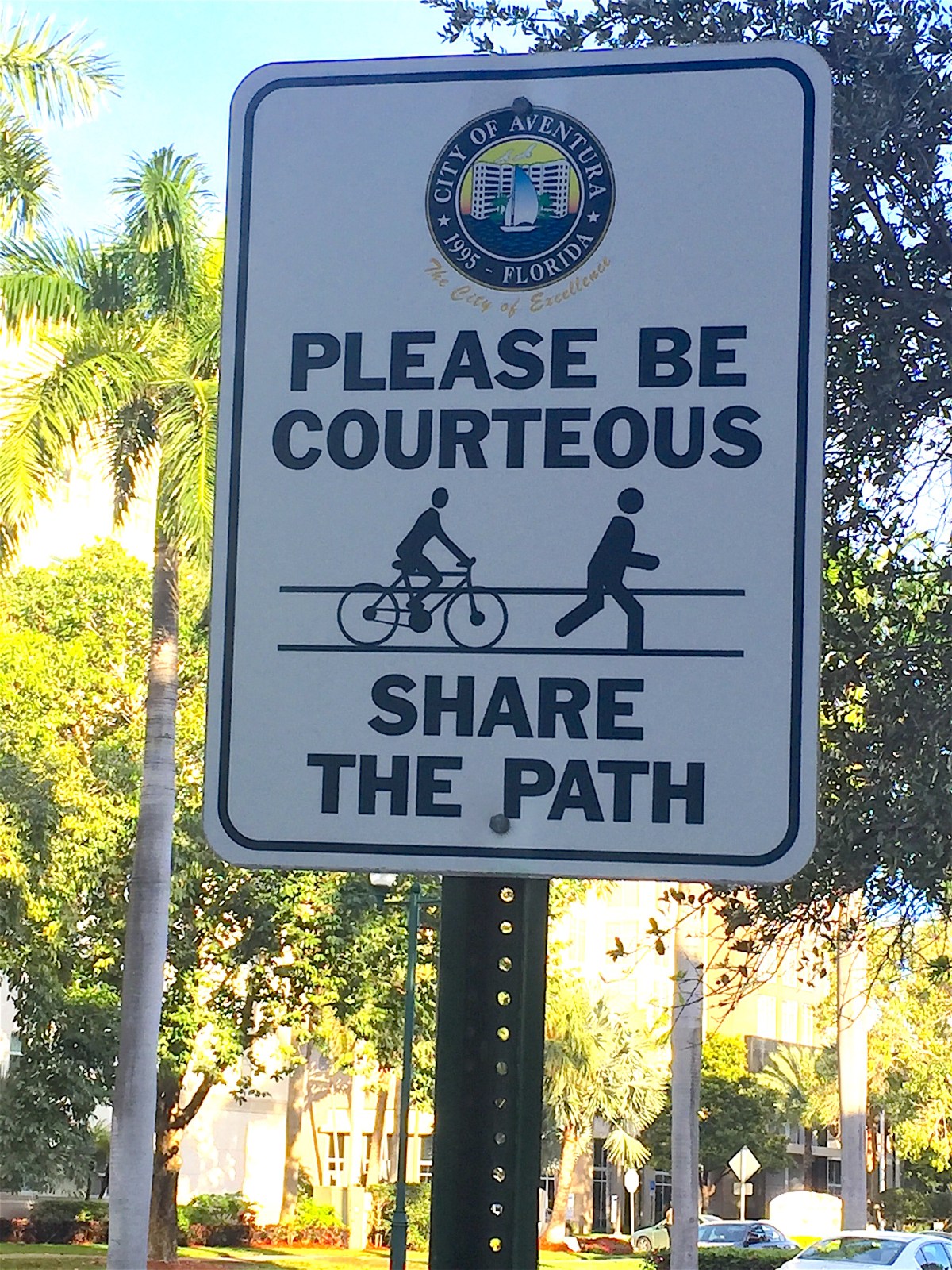
Sign of the Times

Today I noticed this sign on my morning walk. I had never noticed it before, and I walk the same route daily.

Rarely do we look for signs (other than street names telling us where we are). But 2017 started with some very ominous signs: A threat to gut the House Ethics Committee, which was then immediately reversed after a Trump tweet; Trump disregarding Intelligence (yes, I said that).He has brushed aside reports on Russian hacking and our election, and has been cozying up to Julian Assange, Dr. Evil of Wikileaks. Sure, it’s more of the same–only moreso .

The vitriol and lack of decency– much less, common decency– is standard.  Hey grownups: Forget Simon Sinek’s explanation of what’s wrong with Millenials. Adults seem to have lost their way (and many seem to have lost their minds). It’s the grownups who need more discipline and direction.

I can disagree and prefer a different path without being discourteous in public.  I can also share the path with those approaching from the opposite direction. But, I am also acutely aware of those who disregard decency (and Intelligence). I don’t believe that that path leads toward anything but a dead end.

Take heed of the signs. There is much positive work to be done. And please be courteous–share the path!


IMG_1209.jpg

The Hateful ate

I expected a close election, with half of the country to be disappointed. I confess, I had the other half in mind. But either way, there is so much hate. Many are astounded that a man who ran on hate, bigotry, willful ignorance, crudeness, debasement, lack of sophistication, dearth of knowledge, and disregard of facts won the election. He is absolutely hated by so many, but obviously so many others disregarded his blatant narcissism and obnoxious behavior, because they hated the woman who opposed him. They also hated the status quo and wanted change.

Some explained the choice as the lesser of two evils. EVILS. I beg to disagree. Flaws are not evils. Too many no longer make such an important distinction. It is easier to be hateful toward that (or those) with whom we might disagree or even profoundly disagree.

Now, though, we have a country that “understands” (assumes) that hate is somehow brilliant politics. It defeats compromise (and even decency) and efforts to include an array of concerns. Hate disguised as authenticity or political or economic philosophy wins.

But hate doesn’t really win. It infects. The hate perpetrated against Obama, rather than any attempts to compromise or meet real people’s real needs, rendered our government practically impotent. Opposition to the point of doing nothing was more important than the messiness of imperfect policies or the ongoing work necessary for better solutions.

Hate has been a galvanizer of support for a very long time.

Our electorate has become a hatefulate, but everyone sees hate in the other side.

After perpetrating hate for so very long, the electorate has increasingly chosen to fragmentate and look to associate with those who hate the same stuff that they do. We communicate and concentrate amongst our own kind, and denigrate those with whom we can not seem to commiserate. We over -saturate and self-medicate.

I don’t mean to pontificate (well, maybe I do), but how can we graduate from being a hatefulate? The rhetoric of hate takes many forms. Some rhetoric and ideas are indeed hateful and absolutely shameful. We are a nation that has a horrific history of hate and exclusion, that has slowly transformed toward inclusion and opportunity, but not without hate. We have to reckon with being a hatefulate while saying how much we love Democracy and all the greatness of the U.S. We must look at ourselves, and the ease with which we dispense hate.

I too hate bigotry and misogyny, and injustice of any kind. I hate rudeness, and bullying, and obstinacy. I hate willful ignorance, and cruelty and disrespect. But I need to not be hateful. I see so much hatefulness even for good ideals. The hatefulness must be tempered.

We are a hatefulate as much as we are an electorate, employing hate as a means to win. I have to be hopeful, despite my overwhelming concerns. There is so much work we can do to improve matters, and people’s lives. And as individuals, we need to look at our own hatefulness, even if we are publicly polite. Hate has tremendous energy that can be toxic. It is easy to seize that energy to “win”. The sense of loss is what keeps driving hate. But the hatefulate really does lose. That’s US.

Base Ick

I have a confession. I have not watched a single debate this election cycle. I have always sought to be a good citizen, engaging in issues and participating civically. In fact I was drawn to teaching middle and high schoolers as a means to social/cultural and political/civic change. I always encouraged students to watch the debates and read newspapers. We would debate issues and discuss the debates. It was always a part of civic engagement. This year, though, I couldn’t . I wouldn’t.

With the immediacy of the internet and social media, the opportunity to get an up close look at the presidential candidates in real time seems to happen every moment of every day. The debates seem almost anachronistic to me. They are a tradition that seems to be less relevant as a litmus test of governance, than as a WWE match. These debates reinforce the worst. Of course, no doubt this year it is because of Trump, the anti-politician who has demeaned politics, and everyone and everything.

Of course I have read and watched recaps and analysis the next day, and even during the primaries when the first Democratic debate was substantive, I was not compelled to watch. The reality show that was unreal on the Republican side was easy for me to resist. I could be informed within hours, without needing Maalox.

Without enumerating the litany of disqualifiers that should have long ago eliminated Trump, I am frustrated that for so many election cycles, perhaps this one even more, the campaigns are played to the base. And what an apt term “base” is.
Base can refer to the foundation or starting point; that which (or in this case, those who) support the work (or organization). The base is a conceptual structure or entity upon which something is dependent. Sometimes, the base refers to a substance. In this case, the base  is not about substance. In our politics, the base is about ideology; but mostly it’s about anger and hate. It is worth noting that the base is the bottom.

Of course, as an adjective, “base” means without moral principles; lowly. Hmmmm……

The efforts of politics are directed mostly at the base. During the campaign, it is about garnering support from the base (i.e. strengthening the base), and then playing to the “undecideds”. These uncommitted voters are a tiny swath of the American electorate, and yet their votes are clamored for in the most outrageous, despicable ways, further separating politics from governance, much less from civility. The control of our politics is based on those who are uncommitted or possibly undecided.

We have been living in the gutter during this unbearable election season. Baseless comments, even fact-checked, get repeated and used to rile up anger and hate. Facts seem meaningless. Facts should be basic to decision making regarding our government, especially the presidency. But we are stuck having to try to not look at the disgusting politics, much less the disgusting speech and gestures that have captured this election cycle more than ever. What could be more base than misogyny, racism, jingoism, insulting veterans and their families, insulting disabled people, threats of violence or lack of due process, not paying taxes, taking advantage of workers, students, denying environmental threats…..and that’s not even mentioning the verbiage.

Our democratic principles are based on human dignity and decency.  Right now it’s back to base icks.

Dis Appearance

“I just don’t think she has a presidential look and you need a presidential look.”

 
One way or (and) another, Donald Trump dissed Hillary Clinton’s appearance. Of course he’s not the first or last to dis HRC’s appearance, but he used it as a disqualifier for the presidency of the United States.

Whether he was being sexist (he was), or just a jerk (he was), we often talk about looking presidential, as opposed to a presidential look. “Looking presidential” implies that a person exhibits certain qualities with a demeanor of distinction: authoritative (not authoritarian); intelligent (not ignorant); well informed (by reputable resources and critical thinking); diplomatic (not wheeling and dealing); cordial; articulate…

Other qualities such as charisma may be highly regarded, but ultimately seriousness is preferable for a job that demands gravitas and clear thinking. Strength is another quality that is difficult to define, but purposeful beyond self would be respected. Oh, and then there’s respectable…. I guess there are varying definitions of looking respectable, but presenting (not exclaiming) oneself as decent, reasonable, of substance…these seem to comprise an expression of respectability.

It’s amazing how much we disregard, disqualify, disrespect, distrust, dishonor, and even just dis people based on appearance. We assume a tremendous amount based on appearance. Even those who prefer to minimize an appearance of effort in their appearance, are conveying something through their appearance, namely: I’m not shallow; I’m interested in more than my appearance. Likewise, we often assume that those who have sartorial interests or accessorize are making a different sort of statement, and that those interested in presenting themselves more materially are therefore shallow and/or materialistic. Beware— sometimes appearances can be deceiving!

As we are all always concerned about looking good (whatever that may mean)—of a certain type or status—even if that means modest—we are always aware of when others look bad. Looking good or bad goes way beyond our physical appearance. It’s what we do and how we are. We use external appearances too often as assessments of character—that which really defines whether or not we look good.

And yet, everyone has a look. We can change our look through hair, clothing, glasses, etc., and we tend to think of this as expressing our selves and/or our position. Some of us, however, only know how to look one way. Our look hasn’t changed, but have we?

So what about that presidential look? What does that even mean? Looking presidential is more significant than a presidential look, although a presidential look should reflect the qualities that have one look presidential. A presidential look (or any look) is one’s superficial (external) appearance. Looking presidential is one’s demeanor.

Trump does not look presidential; nor does he have a presidential (modest and distinguished) look. Why would he dis appearance? Because it’s the lowest common denominator. It’s broad enough to include the most base of his base, who have difficulty with race and gender (as they are understood first by appearance). Because if anyone is shallow, it’s Trump. And those Trumpeters want simplistic, caustic, anti-, because they regard their blowhard as strong.

Why dis appearance? Because it immediately attracts the disgruntled.

To me, that doesn’t look very good.

Philly Cheese Stake

This week has been pretty sunny in Philadelphia. I have watched many conventions, but have never been so moved over and over and over each night. Speaker after speaker shared stories that continue to inspire and remind us of possibility, and of what policy can really do for individuals.

The Dems seem to have embraced a traditional kind of American patriotism this week. Like Mohamed Ali’s refrain, “I’m the GREATEST”, Dems embraced American exceptionalism and repeatedly declared how great America already is. This used to be the province of the Republicans, wrapping themselves in the flag (or sticking themselves with flag pins), while any critique was denounced as unpatriotic.. You’re either with us or against us. It was a simplistic patriotism.

The Dems’ patriotism, on full display this week in Philadelphia, included critique and dissent, but mostly a plethora of joy and celebration for the myriad ways one can more fully realize one’s potential, and even transform challenges and tragedies, as long as we find ways to support one another politically. The testimonies of those whose lives were made better because of actual policies, were remarkable. So much courage and brilliance was on display. It was colorful in every way. It was thrilling and amazing. I have never seen or heard anything like it.

Battles that I have witnessed (and some I have participated in) for civil rights for women, African Americans, immigrants, disabled, LGBTQ, first responders, veterans, and more were shared and celebrated. It was impossible not to notice the multi-ness at the Democratic convention. That was a powerful image of America. Sure, there was also plenty of cheese. Maybe I’m just getting old, but I ate it all up.

I think we wanted some cheese. There has been too much acridity in our politics for much too long. Dems seemed to realize what a toll that has taken, and made a concerted effort to feel good; to serve up some comfort food. And they did.

It was an easy contrast to the fear and hate on display at the Republican convention. There were so many outstanding speeches thus far at the Democratic convention, that each day’s ranking of who gave the best speech  became silly. (Ok…The Obamas). But despite the displays of intrepidness, decency, knowledge, experience, compassion, and rhetorical skills, the celebration of our American greatness also seemed threatened. And not by external threats.

What’s at stake in this election is now being called Trumpism. President Obama gave the perfect coda to his political career last night. Having endured the suggestions and attacks from Palin and others that Obama was somehow not American, or against America, and having endured the “Birtherism” that Trump inflamed early on in the Obama presidency, Mr. Obama somehow outdid himself as he outlined the ways in which Trump and his “philosophy” (mostly  attitude) is antithetical to American ideals and to America itself. Obama brilliantly articulated his own American essence and patriotism, while eviscerating Trumpism as unpatriotic. Obama cast Trump (and Trumpism) as un-American! Take that!

Many have found displays of patriotism cheesy. It’s so easy to be cynical. What’s at stake was never better articulated than it was last night, which is saying quite a bit, given Obama’s rhetorical genius.
It is possible to acknowledge the greatness of America and take pride in achievements while still acknowledging that so much more needs to be accomplished in the economy, jobs, healthcare, education, policing, racial issues, veterans’ issues, equal pay, low income communities, restoring the middle class, gun violence and safety, infrastructure, getting big money out of politics, homeland security, cyber-security, environmental safeguards and energy strategies, innovation, international issues, and more.

Tonight will be the last night of the convention, and I anticipate a healthy portion of Philly Cheese Stake. It may be cheesy, but it is necessary to remind ourselves of our better angels, and to have those wings expand. Trumpism, at the very least, divides and contracts. It leaves us bitter and weaker, and worse. Too much is at stake.

Taking Our Pulse

It’s been an intense time.

Most of us are neither cavalier nor warrior, yet find ourselves oscillating between the two, even if only in our beliefs.

We have been inundated with commentaries and reactions, hoping for a new way to parse the constant barrage of anxiety provoking events—political and societal. The intensity of our politics and divisions only seems to get interrupted by terrorist attacks at home and abroad, when we aren’t mourning cultural icons whom we have worshipped and found ourselves grieving as though we lost a family member (along with our youth).

The anxiety and grief are difficult enough, but the incessant barrage of audio and video clips, articles, tweets, and responses heighten our anxieties and negative emotions and leave us enervated.

The issues that seem so acute and immediate, and the seemingly always extreme rhetoric, may continue to demand attention, but also seem to be repetitive and unable to be reasonably resolved. It feels like unending noise—often overwhelming, and too often threatening to our sensibilities, yet commanding visceral responses while we crave rational and critical thought. It feels like adrenaline overload; like living near a war zone, except we know our situation is not quite that grave, nor are our political fights matters of imminent life and death, despite the fear mongering.

We may be deeply divided politically and economically, as well as ideologically in many ways, but we seem to be united in states of anxiety and fear, and strangely enough, united in states of exasperation and a sense of insufficiency.

After seemingly endless violent attacks at home—whether by homegrown terrorists, and/or hate, or by individuals so detached and driven toward violence with the easy accessibility of guns and endless rounds of ammunition, we have seen and are reeling from the confluence of factors that seem to generate increasingly frequent episodes of gun violence— especially the intentional killing of innocent folks.

Last week’s massacre during Latin Night at the LGBT club Pulse in Orlando felt at once like a familiar spasm, and also like a new or more unendurable convulsion. It was like a grand mal—even more horrific than we had previously seen.

The typical response to such horror and terror—the moment of silence and prayer—was disrupted with cries of despair and demands for change through action (legislation). The silence wasn’t doing anything. United in a state of grief, Pulse became ours. Whether we knew anyone at the club or not, we knew that those affected by the massacre were our extended kin.

With all the commentary and reactions, and the overwhelming noise, it is easy to want to disconnect. But Taking our Pulse reveals that we are indeed united in our state of grief and despair, recognizing that hate and terror come from internal as well as external arteries. Our vital signs are a bit iffy, but after our Pulse was taken last week, we may now be ready for more moderate exercise.

It is too soon to know if our heart rate is still resting, or if a subtle shift has occurred since our Pulse was taken. Using well established protocols and procedures, there is a palpable response and a bit of resuscitation of character and strength to restore our health. We may not be able to avert all attacks, but if Taking our Pulse will cause us to respond more thoughtfully and courageously to make it at least as cumbersome to get guns, especially assault weapons and ammunition, as it is to get an abortion, or vote, or as regulated as buying Sudafed, then we will at least have honored those who were senselessly slain. And we may even be stronger and healthier going forward.

Sweatin’ to the Oldies

Bernie Sanders is 74; Donald Trump is 69; Hillary Rodham Clinton is 68. I wish I had a fraction of their energy, and I am significantly younger, although no youngster myself. But I’m really sweating this election.

Besides their ages, this election cycle is fraught with a “Back to the Future” sense of direction for our country. The Trump and Sanders campaigns have motivated followers to get excited about undoing. The Clinton Campaign has been rather uninspiring, but has been attempting to veer left, while remaining centered on the importance of strengthening our institutions, rather than upending them.

The Trump and Sanders campaigns feel unconventional, not just because no one initially expected either one to go to the Conventions, but because they have aroused the energy of anger and outsider status, ironically of mostly white males, who seem to relish the “outsider” candidate who says what they are thinking, and maintains a steady sense of chutzpah.

And HRC….she maintains that her entire life has been chutzpah; the boldness to work hard and achieve in various leadership positions, and get knocked down over and over, and keep pushing forward. The media has not captured inspiring snippets of her. Mostly, she’s talked about in the media as being disliked and around forever, which has become a serious negative in this cycle.

Her quality of being guarded tends to fuel suspicion, and of course, she’s had a history of cozying up to the rich and powerful, and then having a private e-mail server as Secretary of State. None of which is unique to her, or illegal; just not okay either. These issues that continue to plague her feed the narrative of the Clinton Chutzpah (as opposed to her own lifetime of experience and service)— not the audacity of hope or of dismantling the status quo, but of getting away with what they can at the time.

Both Hilary and Bill Clinton have great intellects, yet do stupid stuff all the time. Both Hillary and Bill Clinton can be shrewd and competent, and create long lasting alliances across demographics and across the world, yet still manage to generate ire at home. Hillary Clinton, unlike Bill, does not seem to enjoy the political campaigning, but she has created an amazing resume that has her in most ways uniquely and historically qualified to become POTUS.

But in 2016, experience is the enemy. It’s a narrative of what is wrong with US, and although 3 candidates who occupy all the air time are all Senior Citizens, this country seems to be suffering from Senioritis. Enough with the plodding along and policy that can be worked on by those with different ideas.

In fact, the parties themselves are in disarray. Will we end up with the party of the affected and the party of the disaffected? It’s getting to be more perspiration than inspiration. Being inspired by being disaffected and angry is a dangerous path.

So is the only way that these old timers can inspire is to invoke old stories and old grievances? Somehow, it’s been a sweat inducing exercise thus far.

Outthink Disruption

I recently saw a Facebook ad for IBM Analytics with the slogan “Outthink Disruption”. What a perfect tagline for our current culture of politics, and our culture and our politics. Forget distractions; we live in the age of disruptions, as though that’s a good thing.

Those who seek to disrupt feel that they are not served by the status quo. Disruption may be effective and even appropriate. Altering or even destroying the structure of something may be important to contributing to or saving lives. Or, such a disturbance may merely interrupt or cause more problems.

When I saw the tagline “Outthink Disruption”, Donald Trump had just become the presumptive nominee of the GOP (a nostalgic name for what is not very related to the modern Republican Party). Certainly Trump has been a Disruption, and he encourages his Trumpeters to Disrupt.
One could say that Bernie Sanders is also advocating Disruption, although without the mishugas, obnoxiousness,low brow-ness, narcissism, insults, hate, misogyny, racism, jingoism, xenophobia, or winking at violence.

The momentum for Disruption is palpable, but we have been living through 8 years of thoughtless disruption that has yielded frustration left and right. Disruption can’t be the goal. We have to Outthink Disruption. Progress occurs incrementally, and often through compromise—something that our culture  (or politics) doesn’t embrace. We expect instantaneous results—disruption—and we tout our way of life as the ultimate because we can do whatever we want in an instant.

Except we can’t. Not without ramifications.

As a culture, we have become hateful—not only of those we fear might seek to destroy us, but hateful of ourselves, and we are destroying ourselves. The vitriol that occurs during Primary season, and through the general election, seems to heighten each cycle. I’m not sure if we are really more hateful than ever, or that hate has a YUUUUUUUGE platform. Everyone yells and posts and overexposes and then stays within one’s own social and anti-social media bubble, condensing the ire and agreement.

I’ve heard all sorts of statistics, (which I take with a grain of salt), about how much hate there is for Trump and for Hillary. HATE. Hate is very powerful. It envelops and distorts. It is irrational. It is toxic. I hate hate. I have certainly felt hate. The fire of hate fuels the ego’s sense of what is right. But I don’t want to hate people. It’s actually too easy. I hate intolerance. I hate plenty of ideas and ways of being. Hate can lead to dangerous disruption—not merely shaking things up or tweaking the status quo.

We have to Outthink Disruption, which means examining our love of hate (and our uncomfortableness with thinking outside our comfort zones).

When I saw the tagline “Outthink Disruption” for IBM analytics, I thought it was a clever, albeit almost 20 year late, response to Apple’s “Think Different” campaign. “Think Different” was actually a response to IBM’s motto “Think”. And here we are in 2016….

Can we Outthink Disruption?

The Man Who Sold the World

Michael Stipe:https://www.youtube.com/watch?v=hF2ed7ouU3o

Nirvana: https://www.youtube.com/watch?v=fregObNcHC8

Lulu: https://www.youtube.com/watch?v=RV8ywV7KwSI

David Bowie:https://www.youtube.com/watch?v=HSH–SJKVQQ


Over the last 24 hours, I have been inundated with videos of Trump and Stipe, with headlines about the most incredible audio from these men.

Trump managed to suggest that women who get abortions should be punished, and when the backlash was immediate and fierce, he backtracked and suggested that doctors who perform abortions should be punished, not the women who undergo the procedure.

Even abortion foes reacted strongly against Trump’s comment. John Kasich tweeted: “Of course women shouldn’t be punished for having an abortion.” This from a staunch opponent of abortions. Really? Since when have women who are pro-choice, much less suffered through an abortion, not been punished? Granted, the punishment is not prison or a fine, but the endless shaming and aggression against those who are pro-choice has always trumped (pun intended) compassion or concern or even curiosity about alternatives.

Whether Trump’s latest belch will affect his polling remains to be seen. After all, he’s the man who sold the world. He says what some think. He’s a zillionaire, so he must be the most capable and smartest in the world. He wrote The Art of the Deal. He’s bought and sold so much, you won’t believe how much. He’s the man who sold the world.
As all the media, social and anti-social, were broadcasting and posting Trump’s comments—about punishing women or physicians, the media was also sharing a rebroadcast (you-tube) of Michael Stipe, former frontman for R.E.M., singing a haunting cover of “The Man Who Sold the World”, by David Bowie. He performed it on The Tonight Show the other night, in advance of his “Music of David Bowie” tribute concert. His haunting rendition hardly conjures The Donald, but captures the personal searching for ourselves that Bowie’s version, and Nirvana’s unplugged version, also evoke. Yet, Stipe puts his own stamp on it, as did Bowie and Nirvana (Kurt Cobain, especially).

Art speaks truth to the human experience, and individuals find their specific identifications with a work of art. The style of Bowie’s 1970 song, and Nirvana’s 1995 Unplugged cover, and Michael Stipe’s 2016 rendition are each artist specific, yet the song seems timeless.

Demagoguery and hate are also timeless. There are always those who would sell the world for power. I couldn’t help but consider this song that was being posted everywhere yesterday in the context of the events of the day—namely, Donald Trump’s latest. The interesting thing about “The Man Who Sold the World” is that it is both the demagogue and us.

If the original intent of the song was to meet and “shake hands” with our “other” (lesser) selves, its meaning extends to a societal level. We not only have tremendous economical, social, religious, educational, cultural differences among us in the U.S., but we somehow have to shake hands and meet. We can’t merely sell the world and think we will continue to be successful.

I know that the man who sells the world, i.e. Donald Trump, is far from the guy Michael Stipe, Kurt Cobain, or David Bowie were evoking, but there is something quite amazing about The Man Who Sold the World. It is fitting that Stipe’s affecting rendition was being played everywhere the same day that Trump’s “punishing” comments were everywhere.

We passed upon the stair,
We spoke of was and when,
Although I wasn’t there,
He said I was his friend,
Which came as some surprise.
I spoke into his eyes,
“I thought you died alone
A long long time ago.”

“Oh no, not me,
I never lost control
You’re face to face
With the man who sold the world.”

I laughed and shook his hand
And made my way back home,
I searched for form and land,
For years and years I roamed.
I gazed a gazley stare
At all the millions here:
“We must have died alone,
A long long time ago.”

“Who knows? Not me,
We never lost control.
You’re face to face
With the man who sold the world.”

“Who knows? Not me,
We never lost control.
You’re face to face
With the man who sold the world. —David Bowie, first released in the US, Nov.1970


I just discovered Lulu (To Sir With Love)’s version of the song from 1974. Perhaps this version, albeit 1974 pop, is the most appropriate version. Women still feel face to face with The Man Who Sold the World. Of course, the more versions, the more we each recognize The Man Who Sold the World. We’re face to face with him.